
Summary
The reason Love Calculator Is Popular Even Not Scientific is simple: people enjoy playful ways to explore romance, attraction, curiosity, and emotional connection. A love calculator does not prove real compatibility, but it gives users an easy, fun, and shareable experience. Whether someone is checking a crush’s name, testing a partner’s match percentage, or simply enjoying a romantic game, these tools work because they connect with human emotions, curiosity, hope, and entertainment.
Table of Content
- Why Love Calculator Is Popular Even Not Scientific in Modern Dating
- The Psychology Behind Love Calculators
- Why People Use Love Calculators for Fun
- Love Calculator Is Popular Even Not Scientific Because It Feels Personal
- Entertainment, Curiosity, and Social Sharing
- Are Love Calculators Accurate?
- How to Use a Love Calculator the Right Way
- Conclusion
- FAQs
Why Love Calculator Is Popular Even If It’s Not Scientific
Love is one of the most searched, discussed, and emotionally powerful topics in the world. People want to know whether someone likes them, whether a relationship can work, whether their crush is a good match, or whether their partner is truly compatible with them. This natural curiosity is one of the biggest reasons love calculators have become popular online.
A love calculator is usually a simple online tool that asks for two names, birthdays, zodiac signs, or other basic details. Then it generates a love percentage, compatibility score, or match result. Scientifically, this score does not prove whether two people are emotionally, mentally, or romantically compatible. Real compatibility depends on communication, trust, shared values, emotional maturity, lifestyle, attachment style, conflict resolution, and long-term commitment.
Still, millions of people enjoy using love calculators. Why? Because these tools are not only about accuracy. They are about entertainment, hope, curiosity, fun, emotional validation, and social interaction. A love calculator creates a quick moment of excitement. It gives people something to smile about, talk about, share with friends, or use as a playful conversation starter with someone they like.
Romantic attraction has always included mystery. People often wonder, “Are we meant to be?” “Does my crush like me?” “Is this relationship special?” A love calculator gives a simple answer to a complicated emotional question. That simplicity is exactly what makes it attractive.
Why Love Calculator Is Popular Even Not Scientific in Modern Dating
Modern dating is fast, digital, and full of uncertainty. People meet through social media, dating apps, online communities, classrooms, workplaces, and friend groups. In this environment, many people look for quick ways to understand romantic signals. A love calculator fits perfectly into that digital culture because it is instant, simple, and emotionally engaging.
Unlike serious relationship counseling or personality assessments, a love calculator does not require deep effort. Users only enter names or basic details and receive a result within seconds. This makes it easy for teenagers, young adults, couples, and even married partners to use it casually.
The popularity of love calculators also comes from their low-pressure nature. A person may feel nervous asking a crush directly about feelings, but checking a love percentage feels harmless. It gives them a playful way to explore romantic possibilities without emotional risk.
For example, someone may type their name and their crush’s name into a tool just to see what happens. If the result is high, they may feel excited. If the result is low, they may laugh it off because they already know it is only for fun. This emotional safety makes love calculators appealing.
Another reason is that online users love interactive tools. Articles explain love, but tools involve the user. A love calculator makes people participate. They are not just reading about compatibility; they are checking their own match. This interactive experience increases engagement and makes the tool memorable.

The Psychology Behind Love Calculators
The psychology behind love calculators is deeply connected to human curiosity and emotional uncertainty. People naturally want answers about relationships because romantic feelings can be confusing. A person may feel attracted to someone but not know if the other person feels the same. A couple may feel close but still wonder whether they are truly compatible.
Love calculators offer a simple emotional shortcut. They give users a number, and numbers feel clear. A love score of 85% may feel more satisfying than a vague answer like “maybe.” Even when users know the result is not scientific, the score feels exciting because it gives shape to an emotional question.
This is also connected to the human desire for validation. When people like someone, they often look for signs that the connection is real. A love calculator result can feel like a small positive signal, especially if the score is high. It does not prove anything, but it can make the user feel hopeful.
Another psychological reason is the curiosity gap. When people see a tool that promises to calculate love compatibility, they want to know the result. The question itself creates curiosity: “What will our score be?” This curiosity drives clicks, engagement, and repeat use.
Love calculators also work because they create emotional imagination. A simple percentage can make someone imagine a possible relationship, future conversations, romantic moments, or deeper connection. Even if the tool is random or algorithm-based, the experience can feel meaningful because love itself is emotional.
According to the American Psychological Association, romantic love involves emotional attachment, affection, and attraction. You can read more about the psychological meaning of romantic love. This shows why people care so much about anything connected to love, compatibility, and emotional bonding.
Why People Use Love Calculators for Fun
Most users do not open a love calculator expecting scientific relationship advice. They use it for fun. That is one of the most important points to understand. A love calculator is popular because it works like a romantic game, not because it replaces real relationship understanding.
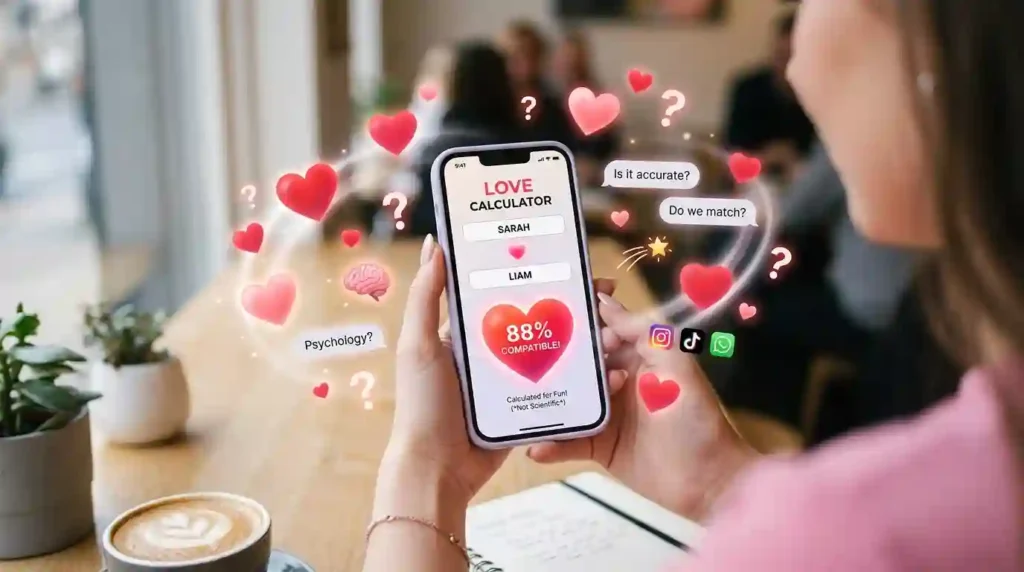
People use love calculators when they are bored, curious, excited, or emotionally interested in someone. Friends may use it together for entertainment. Couples may use it as a cute activity. Teenagers may use it to test crush names. Social media users may share their results for fun.
The tool creates a small emotional event. It is quick, easy, and playful. In a world where people scroll through short videos, quizzes, memes, and interactive posts, love calculators match the same behavior pattern. They provide instant entertainment with a personal touch.
Another reason people enjoy these tools is that love is a universal topic. Almost everyone understands romantic curiosity. A person does not need technical knowledge to use a love calculator. It is simple and emotionally relatable.
Some users also use love calculators as conversation starters. For example, someone might send a result to a partner and say, “Look, we got 92%!” This can create laughter, flirting, or a cute romantic moment. Even if the result is not meaningful scientifically, the shared experience can be enjoyable.
This is why love calculators continue to attract traffic. They combine entertainment, romance, curiosity, and personalization in one simple tool.
For users who want to try a fun compatibility result, they can Check Your Love Compatibility Score Instantly.
Love Calculator Is Popular Even Not Scientific Because It Feels Personal
One major reason Love Calculator Is Popular Even Not Scientific is that the result feels personal. When a user enters their own name and another person’s name, the experience immediately becomes about them. This personal connection makes the tool more engaging than general relationship content.
A blog post about love compatibility may be useful, but a love calculator creates a direct result for the user. This makes it feel customized, even if the calculation method is simple. Personalization is powerful in digital experiences because people pay more attention when the content involves their own identity, emotions, or relationships.
Names are especially emotional. People connect strongly with their own names and the names of people they care about. When a love calculator uses names, it creates a sense of intimacy. The user feels like the tool is reading something unique about their relationship.
This is similar to why personality quizzes, zodiac compatibility tests, numerology readings, and name meaning tools are popular. They may not always be scientific, but they feel personal. They give users a result that seems connected to their life.
Love calculators also allow repeated use. A person may test one crush, then another. They may check their partner’s name, a celebrity name, a friend’s name, or even random combinations. This repeatability increases engagement and makes the tool more addictive.
Entertainment, Curiosity, and Social Sharing
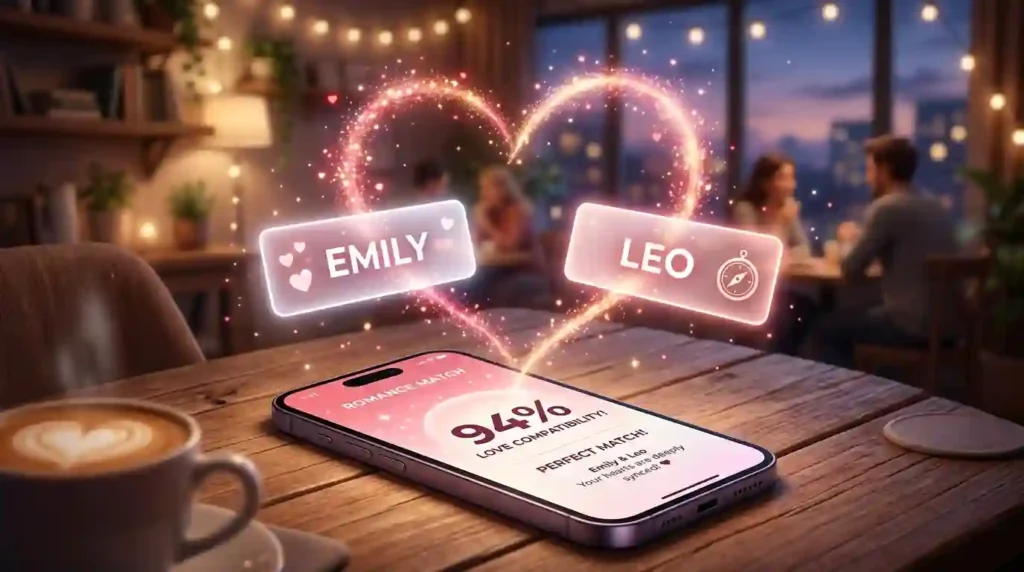
The popularity of love calculators is also connected to social sharing. Online users enjoy sharing content that is fun, emotional, funny, or surprising. A love calculator result can be all of these things.
If someone receives a high score, they may share it with a partner or friends. If the score is very low, they may share it as a joke. If the result is unexpected, it becomes a conversation topic. This makes love calculators naturally shareable.
Social media platforms have trained people to enjoy quick interactive experiences. Quizzes, polls, filters, personality tests, compatibility games, and prediction tools all perform well because they invite participation. A love calculator belongs to this same category.
Another reason is that love calculators create suspense. Before clicking the result button, users feel a small moment of anticipation. They wonder whether the score will be high or low. That emotional suspense makes the experience more engaging.
The result also creates a reaction. A high score may create happiness. A medium score may create curiosity. A low score may create laughter. Any emotional reaction increases the chance that users will remember the tool or use it again.
This is why love calculators work well for entertainment websites, relationship blogs, and romantic tool pages. They are simple, low-cost, interactive, and emotionally engaging.
Are Love Calculators Accurate?
Love calculators are not scientifically accurate in the way a psychological assessment, relationship counseling session, or compatibility study might be. Most love calculators use simple formulas based on names, letters, numbers, birthdays, zodiac signs, or random algorithms. These methods cannot fully measure real romantic compatibility.
True relationship compatibility is complex. It includes emotional intelligence, communication style, shared goals, trust, honesty, respect, lifestyle, family expectations, values, conflict management, and physical attraction. No simple online calculator can fully understand all of these factors.
However, this does not mean love calculators are useless. Their value is entertainment, not scientific prediction. A love calculator can be a fun way to start a conversation, explore romantic curiosity, or enjoy a playful moment with someone.
Users should understand the difference between fun and facts. A high love score does not guarantee a successful relationship. A low love score does not mean a relationship will fail. Real love depends on how people treat each other, communicate, solve problems, and build trust over time.
This is where expectations matter. If someone uses a love calculator as a serious decision-making tool, they may misunderstand its purpose. But if they use it as a fun romantic activity, it can be harmless and enjoyable.
Some tools may give extremely high match results, which can make users curious about how those scores are created. For more details, read What Makes a Love Calculator Give 100% Match.
The Role of Mystery in Romantic Compatibility
Love has always included mystery. Even before online tools existed, people used different ways to guess romantic compatibility. Some looked at zodiac signs. Some believed in numerology. Some compared initials. Some asked friends for opinions. Some looked for “signs” in small behaviors.
A love calculator is simply a digital version of this old human habit. It gives people a playful way to explore the unknown. The mystery of love is one reason people keep coming back to these tools.
Romantic feelings are not always logical. Someone may feel a strong attraction without knowing why. Another person may feel unsure even when everything looks perfect. This emotional uncertainty makes people search for answers.
A love calculator gives a quick result, but the deeper attraction is the mystery behind the result. Users may wonder: “Why did we get this score?” “Is this a sign?” “Should I take this seriously?” Even when they know it is only for fun, the emotional part of the mind still enjoys the possibility.
This is why love calculators remain popular even among people who understand they are not scientific. Humans enjoy stories, symbols, predictions, and playful meanings. Love calculators provide all of that in a simple digital format.
Why Love Calculators Attract Repeat Visitors
Love calculators often attract repeat visitors because they are easy to use again and again. A person may not use a long article repeatedly, but they can use a tool many times with different names or combinations.
This repeat-use behavior is valuable for websites. Users may test multiple names, share the tool, return later, or explore related blog posts. This improves engagement and helps build a stronger content experience.
The tool also has seasonal and emotional search demand. People may search for love calculators around Valentine’s Day, anniversaries, crush situations, relationship questions, friendship tests, and social media trends. Because love is an evergreen topic, interest remains strong throughout the year.
Another reason is that love calculators are simple for all age groups. Young users enjoy them for crushes and fun. Couples enjoy them for romantic entertainment. Friends use them as jokes. Bloggers and social media creators use them for engagement.
From an SEO perspective, love calculators support multiple search intents, including:
- Love compatibility test
- Name compatibility calculator
- Crush calculator
- Relationship compatibility score
- Romantic match percentage
- Couple compatibility checker
- True love calculator
- Love percentage by name
- Online love meter
- Fun relationship quiz
These related terms help search engines understand the topic clearly. A strong love calculator page can also support blog posts about compatibility, attraction, dating tips, romantic psychology, and relationship entertainment.
How to Use a Love Calculator the Right Way
The best way to use a love calculator is to enjoy it as entertainment. It should not replace real communication or emotional understanding. If you like someone, a calculator cannot tell you everything. You still need honest conversation, patience, respect, and emotional awareness.
Here are some healthy ways to use a love calculator:
Use It as a Fun Activity
Treat the result like a game. Enjoy the score, laugh about it, and do not take it too seriously. This keeps the experience light and positive.
Use It as a Conversation Starter
A love calculator can help start a cute or funny conversation. Couples can use it to create a playful moment. Friends can use it for entertainment.
Do Not Make Serious Decisions Based on It
Never decide whether to start, continue, or end a relationship only because of a love calculator result. Real relationships require deeper understanding.
Compare It With Real Compatibility
Instead of focusing only on the percentage, think about real compatibility. Do you communicate well? Do you respect each other? Do you share important values? Do you feel emotionally safe? These questions matter more than any score.
Enjoy the Experience Without Pressure
The purpose of a love calculator is fun, curiosity, and entertainment. When used with the right mindset, it can be enjoyable without causing confusion.
Conclusion
Love calculators are popular because they connect with something deeply human: curiosity about love. People want to understand attraction, compatibility, romance, and emotional connection. A love calculator gives them a quick, playful, and personal way to explore those feelings.
Even though love calculators are not scientific, they remain powerful entertainment tools. They feel personal, create suspense, encourage sharing, and offer emotional excitement. Users enjoy them because they are simple, fun, and connected to one of the most universal topics in life.
The key is to use them with the right expectations. A love calculator cannot measure true love, predict a relationship’s future, or replace real communication. But it can create a fun moment, start a conversation, and add a little romance to the online experience.
That is why love calculators continue to be popular: not because they prove love scientifically, but because they make love feel playful, personal, and exciting.
FAQs
1. Why is a love calculator popular if it is not scientific?
A love calculator is popular because it is fun, quick, personal, and emotionally engaging. People enjoy checking compatibility scores for entertainment, curiosity, and romantic excitement, even when they know the result is not scientifically proven.
2. Can a love calculator really predict true love?
No, a love calculator cannot truly predict love. Real love depends on communication, trust, respect, emotional bonding, shared values, and long-term effort. A calculator result should be seen as entertainment, not a serious prediction.
3. Why do people believe love calculator results?
Some people enjoy the result because it feels personal. When users enter their own name and someone else’s name, the score feels connected to their emotions. Even if they know it is not scientific, a high score can feel exciting or validating.
4. Is it okay to use a love calculator for fun?
Yes, it is completely okay to use a love calculator for fun. It can be a playful activity for couples, friends, or people with crushes. The important thing is not to make serious relationship decisions based only on the score.
5. What makes love compatibility real?
Real love compatibility comes from communication, honesty, emotional maturity, shared values, respect, trust, lifestyle balance, and the ability to solve problems together. These factors matter much more than any online love percentage.