
Summary
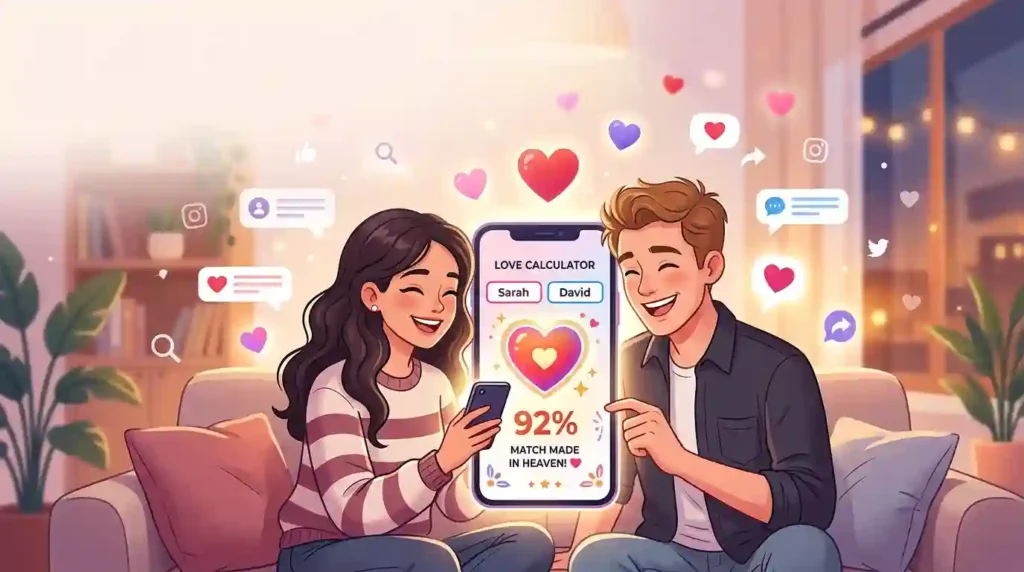
Why Name-Based Love Calculators Became So Popular is a fascinating topic because these simple digital tools combine curiosity, romance, entertainment, nostalgia, and social sharing into one quick experience. From teenagers checking crush compatibility to couples testing their names for fun, name-based love calculators became a memorable part of internet culture because they offer instant emotional engagement with almost no effort.
Table of Content
- Introduction
- What Are Name-Based Love Calculators?
- Why Name-Based Love Calculators Became So Popular Online
- The Psychology Behind Name Compatibility Tools
- How Curiosity Made Love Calculators Go Viral
- Why Name-Based Love Calculators Became So Popular Among Couples
- The Role of Fun, Nostalgia, and Digital Entertainment
- How Social Media Boosted Love Calculator Trends
- Are Name-Based Love Calculators Accurate?
- Why People Still Use Love Calculators Today
- Conclusion
- FAQs
Why Name-Based Love Calculators Became So Popular
Love has always been one of the most searched, discussed, and emotionally powerful topics in human life. People write songs about love, read horoscopes for romantic clues, take relationship quizzes, compare zodiac signs, and look for small signs that a crush may feel the same way. In the middle of this emotional curiosity, name-based love calculators found their place as one of the most entertaining online tools.
A name-based love calculator is simple. A user enters two names, clicks a button, and receives a love percentage or compatibility score. The result may not be scientific, but the experience is fun, quick, and emotionally engaging. That combination explains why these tools became so popular across different age groups, especially among teenagers, young couples, social media users, and people who enjoy lighthearted romantic entertainment.
The popularity of love calculators is not only about romance. It is also about psychology, internet behavior, nostalgia, digital games, and the human desire to find meaning in small things. A simple name match can feel exciting because it connects directly to someone’s emotions. Whether the result says 35%, 70%, or 99%, people often smile, laugh, share it, or try again with another name.
In today’s fast-moving digital world, tools like the Free Love Calculator continue to attract users because they offer instant entertainment without requiring personal details, long forms, or serious commitment. They are easy to use, easy to share, and easy to understand.
What Are Name-Based Love Calculators?
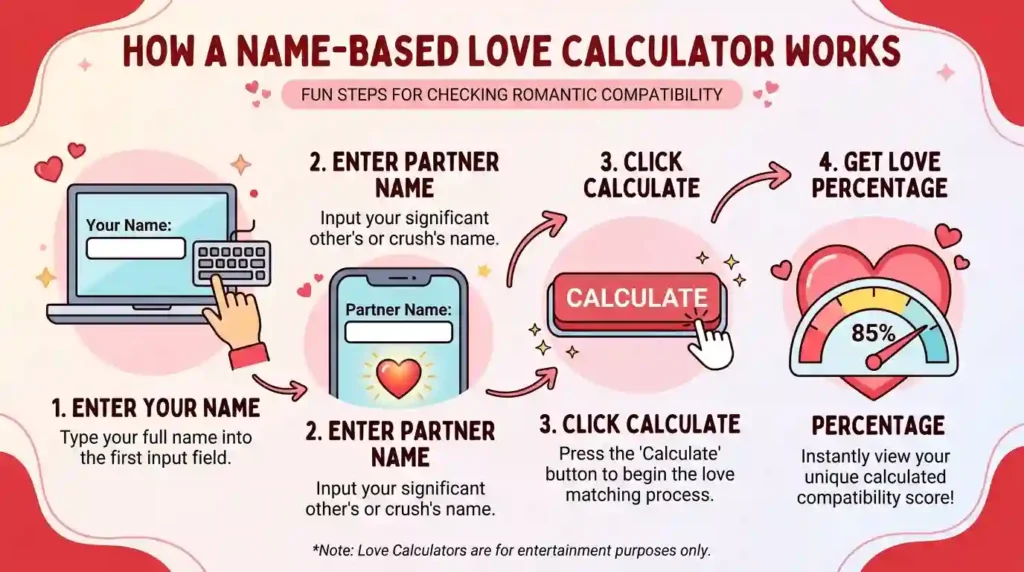
Name-based love calculators are online compatibility tools that generate a romantic match score using two names. Most of these tools ask users to enter their name and the name of their partner, crush, friend, or favorite celebrity. After clicking a button, the tool displays a love percentage, compatibility result, or playful romantic message.
These calculators are often called by different names, such as:
- Love percentage calculator
- Name compatibility test
- Crush calculator
- Romantic compatibility tool
- Couple name match test
- Relationship calculator
- Online love meter
- Partner compatibility checker
The biggest reason these tools are so attractive is their simplicity. Users do not need to answer complicated relationship questions. They do not need to create an account. They do not need to share private information. They simply enter names and receive a result in seconds.
Many love calculator tools use playful algorithms, name-matching formulas, numerology-inspired patterns, letter combinations, or random entertainment-based scoring. The goal is not to predict the future of a relationship. The goal is to create a fun, interactive moment that makes people curious and entertained.
Why Names Feel Personally Meaningful
Names are deeply personal. A name represents identity, memory, emotion, culture, and connection. When someone enters their name with another person’s name, the result feels more personal than a random quiz.
This is why name compatibility tools feel emotionally stronger than they appear. Even though users know the result is for fun, seeing two names together can create excitement. It can make a crush feel more real, a relationship feel playful, or a romantic idea feel more interesting.
Names also carry emotional associations. A person may feel happy seeing their name next to someone they like. A couple may enjoy checking their names just to laugh together. Friends may use it as a joke. This emotional connection gives name-based love calculators a unique advantage over many other casual online tools.
Why Name-Based Love Calculators Became So Popular Online
The internet rewards tools that are fast, simple, shareable, and emotionally engaging. Name-based love calculators fit perfectly into that pattern. They became popular because they offered instant results about a topic almost everyone cares about: love.
Unlike long relationship tests, love calculators require very little effort. A user can complete the process in less than a minute. This low-effort interaction is one of the main reasons these tools spread quickly across websites, mobile apps, blogs, and social platforms.
People love content that gives them a quick emotional reaction. A love calculator result can create surprise, happiness, laughter, curiosity, or even playful disappointment. That emotional response encourages users to share the result with friends or try again with different names.
Instant Gratification and Quick Results
One of the strongest reasons behind the rise of online love calculators is instant gratification. Modern users want fast answers. They search for quick results, short quizzes, simple tools, and interactive entertainment that does not take much time.
A name-based love calculator delivers exactly that. It gives a result immediately. There is no waiting, no complex explanation, and no difficult process. The user enters two names and gets a love score.
This instant feedback loop makes the tool addictive in a harmless and entertaining way. Users often test multiple combinations:
- Their name and their crush’s name
- Their name and their partner’s name
- Their friend’s name and someone else’s name
- Celebrity couple names
- Fictional character pairings
- Ex-partner names
- Future baby name combinations
Each result becomes a small moment of curiosity.
Low Commitment, High Entertainment
Another reason name-based love calculators became popular is that they feel casual. People can use them without feeling judged. They do not need to admit serious feelings or discuss private relationship issues. They can simply say, “I was just checking for fun.”
This makes love calculators socially safe. A person can test a crush’s name without having to confess anything. Couples can check their score without taking it seriously. Friends can use it during conversations, parties, school breaks, or online chats.
The result is playful rather than serious, which makes the tool more appealing to a wider audience.
The Psychology Behind Name Compatibility Tools
The popularity of love calculators is closely connected to human psychology. People naturally look for signs, patterns, and reassurance in emotional situations. Love can be uncertain, especially when someone has a crush, is starting a new relationship, or is unsure about romantic feelings.
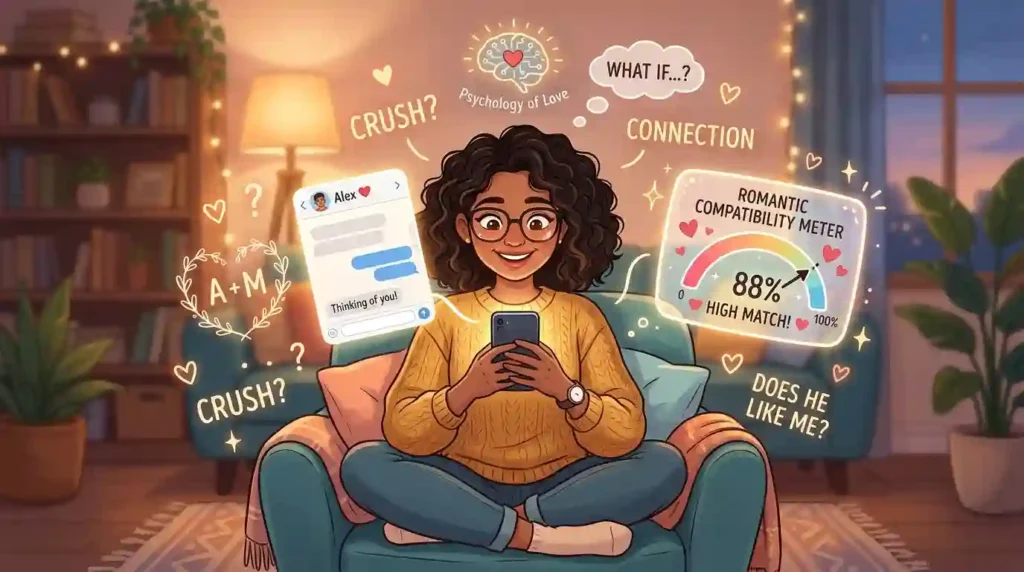
A name compatibility calculator gives users a symbolic answer. Even if the answer is not scientific, it can still feel meaningful because it speaks to an emotional question: “Could we be a good match?”
The American Psychological Association Dictionary of Psychology describes romantic love as involving emotional attraction, attachment, and intense personal connection. This makes love-related tools powerful because they connect with feelings people already care about deeply.
The Human Need for Reassurance
Romantic uncertainty can make people seek reassurance. Someone may wonder:
- Does my crush like me?
- Are we compatible?
- Is this relationship meant to be?
- Do our names look good together?
- Could we become a couple?
A name-based love calculator does not provide real relationship advice, but it gives a playful form of reassurance. A high score may make someone smile. A low score may make them laugh or try again. Either way, the tool provides an emotional response.
Pattern Seeking and Symbolic Meaning
Humans are pattern-seeking by nature. People often find meaning in numbers, dates, names, zodiac signs, initials, and coincidences. This is why astrology compatibility, numerology, personality quizzes, and tarot readings remain popular in digital culture.
Name-based love calculators work in a similar way. They turn two names into a symbolic result. The result may be random or entertainment-based, but the user experience feels personal because names are involved.
This symbolic meaning makes the calculator more engaging than a generic random number generator. Users feel like the result belongs to them.
How Curiosity Made Love Calculators Go Viral
Curiosity is one of the biggest drivers of online behavior. People click quizzes, polls, tests, and calculators because they want to know what result they will get. Love calculators became popular because they create a curiosity gap.
Before clicking, the user thinks, “What score will we get?” That question motivates the action. After seeing the result, the user may think, “What if I try another name?” That leads to repeated use.
The Power of “What If?”
The phrase “what if” is powerful in romantic situations. What if we are compatible? What if my crush and I get a high score? What if my partner and I get 100%? What if my friend and their crush get a funny result?
Name-based love calculators turn emotional imagination into a quick digital interaction. The user does not need to do anything serious. They only need to test the names.
This is why many users do not stop after one calculation. They test different names, compare results, and share screenshots. The experience becomes a mini-game.
Shareability and Conversation Starters
Love calculator results are easy to share because they are simple and visual. A percentage score can quickly become a conversation starter. For example:
“My crush and I got 92%!”
“We only got 45%, should I be worried?”
“Try your name with your partner’s name!”
“Look what the calculator said about us!”
This kind of lighthearted sharing helped love calculators spread through blogs, messaging apps, social media posts, and group chats. The result is not only a personal experience but also a social one.
Why Name-Based Love Calculators Became So Popular Among Couples
Couples often use love calculators as a fun bonding activity. Even when they are already in a relationship, they enjoy testing their names together because it creates a playful moment.
Romantic relationships need fun, humor, and shared experiences. A love calculator can become a small digital activity that makes couples laugh, tease each other, or celebrate a high score.
Many couples also search their names online because they enjoy seeing their relationship represented in different ways. This connects closely with the idea explained in Why Couples Search Their Names in Love Calculators, where curiosity, affection, and emotional validation all play a role.
Couples Enjoy Playful Validation
A high love score can feel like a cute confirmation, even when both partners know it is just for entertainment. It gives couples something positive to react to.
For example, if a couple receives a 95% match, they may laugh and say, “See, we are perfect together!” The result becomes a playful form of validation. It does not need to be scientifically accurate to feel enjoyable.
Romantic Entertainment Strengthens Small Moments
Not every romantic activity needs to be serious. Sometimes couples simply want to enjoy small, fun moments together. Name-based love calculators provide that opportunity.
They can be used during casual conversations, date nights, anniversaries, Valentine’s Day, long-distance chats, or social media trends. The tool adds a little excitement without pressure.
The Role of Fun, Nostalgia, and Digital Entertainment
Another major reason love calculators became popular is nostalgia. Many internet users remember old websites, school computer labs, early mobile apps, and simple online games where love calculators were common.
Before advanced dating apps and personality algorithms became popular, love calculators were one of the easiest romantic tools online. They were colorful, simple, and entertaining. For many people, they bring back memories of childhood, teenage crushes, and early internet fun.
Early Internet Culture Helped Love Calculators Grow
In the early days of the web, simple interactive tools were exciting. Users enjoyed quizzes, personality tests, fortune tellers, name generators, and compatibility calculators. These tools were easy to create and easy to use.
Love calculators became part of that culture because they combined romance with interactivity. They did not require advanced design or complex technology. A basic form and a result page were enough to entertain users.
Nostalgia Keeps Them Relevant
Even today, people return to love calculators because they feel familiar. They remind users of a simpler internet experience. In a world full of complex apps, algorithms, and endless content, a simple name-based love calculator feels refreshingly easy.
This nostalgia gives love calculators long-term value. They are not only tools for new users but also reminders of old digital habits.
How Social Media Boosted Love Calculator Trends
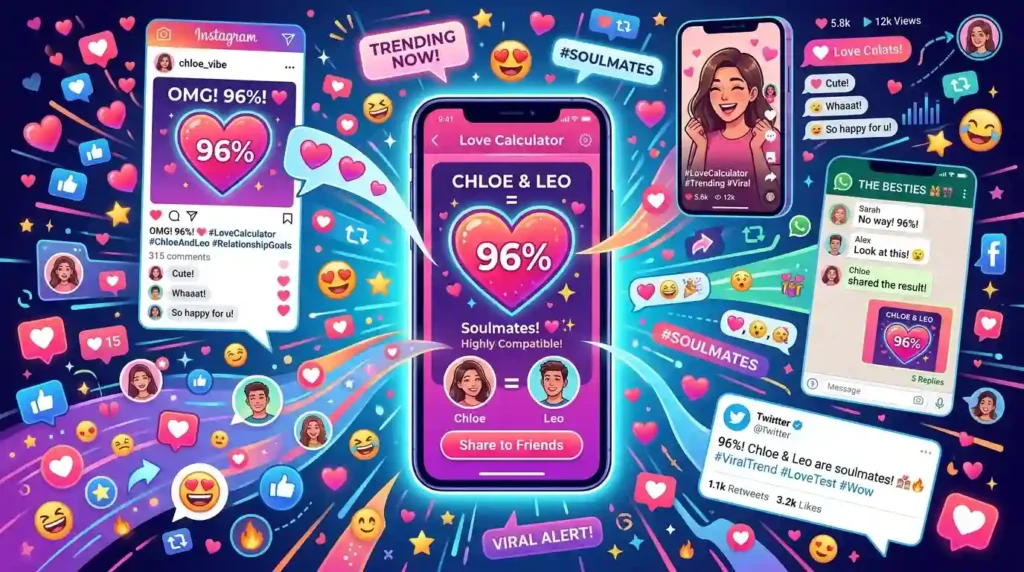
Social media made love calculators even more popular. Platforms like Facebook, Instagram, TikTok, WhatsApp, Snapchat, and X encourage users to share quick, entertaining content. A love calculator result fits perfectly into that environment.
People enjoy sharing content that reveals something about them. A love percentage result feels personal enough to be interesting but casual enough to be safe. This balance makes it highly shareable.
Screenshot Culture and Viral Challenges
Love calculator results are often shared as screenshots. A user can post the result on a story, send it to a friend, or use it as part of a romantic challenge.
Some users create trends such as:
- “Test your name with your crush”
- “Check your love percentage”
- “Try this with your partner”
- “Send this to someone you like”
- “Your score decides your relationship status”
These trends help love calculators reach more people organically.
Social Proof and Peer Influence
When people see their friends using a love calculator, they are more likely to try it too. This is called social proof. If many people are sharing their results, the tool feels fun, popular, and worth trying.
This peer influence is especially strong among younger audiences. Teenagers and young adults often enjoy romantic games, crush tests, and compatibility quizzes because they are easy ways to discuss feelings indirectly.
Are Name-Based Love Calculators Accurate?
Name-based love calculators are designed mainly for entertainment. They should not be treated as serious relationship tests or scientific compatibility tools.
Real relationship compatibility depends on many deeper factors, such as:
- Communication
- Trust
- Emotional maturity
- Shared values
- Respect
- Life goals
- Conflict resolution
- Honesty
- Empathy
- Commitment
A calculator based on names cannot measure these important qualities. However, that does not reduce its entertainment value. People usually understand that the score is playful.
Entertainment vs. Real Relationship Advice
The best way to understand a love calculator is to see it as romantic entertainment, not relationship counseling. It can be fun to check a score, but users should not make real relationship decisions based on a percentage.
A low score does not mean a couple should break up. A high score does not guarantee a perfect relationship. The result is simply a fun digital experience.
Why Accuracy Is Not the Main Point
Most people do not use love calculators because they expect scientific accuracy. They use them because they are curious, bored, hopeful, playful, or emotionally interested.
The fun comes from the experience, not the precision. The value is in the smile, the conversation, the surprise, and the shareable result.
Why People Still Use Love Calculators Today
Even with advanced dating apps, AI chatbots, personality tests, and relationship advice platforms, name-based love calculators remain popular. The reason is simple: they offer a quick emotional experience.
Modern users still enjoy tools that are easy, fun, and personal. Love calculators meet all three conditions.
They Are Easy to Access
Most love calculators work instantly on mobile phones and desktops. Users can access them through search engines, blogs, social media links, or direct websites.
This accessibility keeps them relevant. A person can use a love calculator at any time, whether they are alone, chatting with friends, or spending time with a partner.
They Appeal to All Relationship Stages
Love calculators are not only for couples. They are also used by:
- People with crushes
- New couples
- Long-term partners
- Friends joking around
- Fans testing celebrity names
- Writers creating fictional couples
- Social media users joining trends
Because the tool works for so many situations, its audience remains broad.
They Combine Emotion and Entertainment
The strongest reason love calculators remain popular is that they combine emotion with entertainment. Love is personal. A calculator is playful. Together, they create a simple but powerful digital experience.
This is why name-based love calculators continue to attract users year after year.

Conclusion
Name-based love calculators became popular because they are simple, emotional, entertaining, and highly shareable. They turn two names into a quick romantic result that sparks curiosity, laughter, hope, and conversation. Their success comes from a powerful mix of human psychology, digital nostalgia, social media culture, and the timeless interest people have in love.
Although these tools are not scientific relationship tests, they do not need to be. Their real value lies in the experience they create. They help people explore romantic curiosity in a lighthearted way. They give couples something fun to do together. They allow friends to joke, compare, and share results. They also remind many users of the playful side of the internet.
In the end, the popularity of name-based love calculators proves one simple truth: people will always be curious about love, and they will always enjoy fun tools that make romance feel a little more exciting.
FAQs
1. What is a name-based love calculator?
A name-based love calculator is an online tool that uses two names to generate a love percentage or compatibility score. It is mainly designed for fun and entertainment.
2. Why do people use love calculators?
People use love calculators because they are curious about romantic compatibility, crushes, relationships, and name matches. The instant result makes the experience fun and exciting.
3. Are name-based love calculators real?
Name-based love calculators are not scientific relationship tools. They are entertainment-based calculators that provide playful results using names.
4. Can a love calculator predict a relationship?
No, a love calculator cannot predict the success or future of a relationship. Real compatibility depends on communication, trust, values, respect, and emotional connection.
5. Why are love calculators popular among teenagers?
Teenagers often enjoy love calculators because they provide a fun and indirect way to explore crushes, romantic curiosity, and friendship conversations.
6. Do couples use love calculators seriously?
Most couples use love calculators for fun. A high score can feel cute and validating, while a low score is usually treated as a joke.
7. What makes name-based love calculators shareable?
They are quick, simple, visual, and emotionally interesting. Users can easily share their love percentage results with friends or partners on social media.
8. Are love calculators connected to numerology or astrology?
Some love calculators may use numerology-inspired formulas, name patterns, or playful algorithms. However, most are designed mainly for entertainment.
9. Why do people search their names with their crush?
People search their names with their crush because they are curious, hopeful, and emotionally interested in the possibility of romantic compatibility.
10. Should I trust a love calculator result?
You can enjoy the result for fun, but you should not use it to make serious relationship decisions. Real love depends on actions, communication, and mutual respect.