
Summary
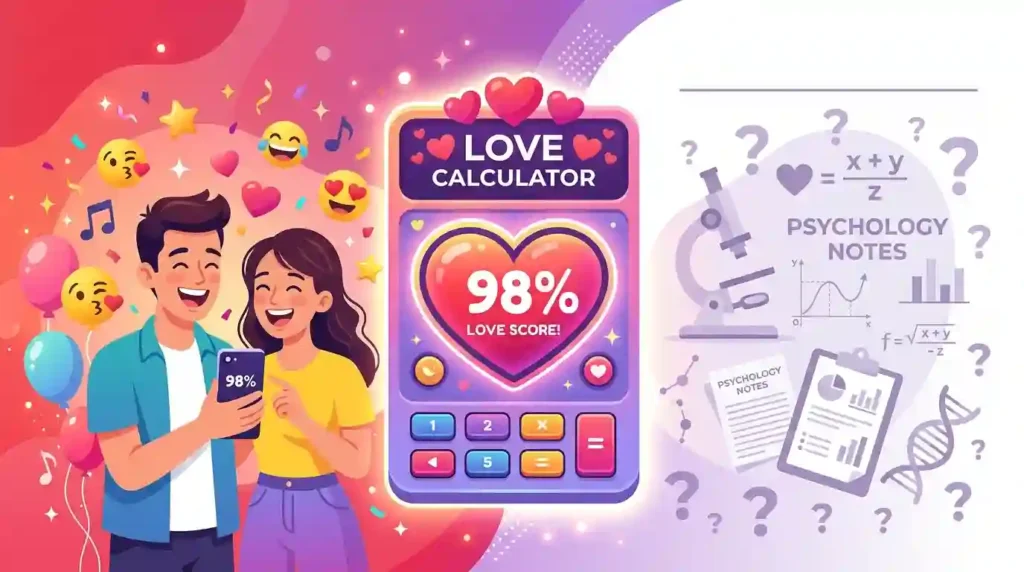
A love calculator can be fun, exciting, and surprisingly engaging, especially when people want to test name compatibility, crush compatibility, or romantic chemistry in a playful way. However, Love Calculator Is More Entertainment Than Science because real relationships depend on emotional connection, communication, trust, shared values, mutual respect, and long-term commitment—not just names, birth dates, or random percentage scores. This article explains how love calculators work, why people enjoy them, what they can and cannot reveal, and why they should be treated as a lighthearted relationship game rather than a serious scientific compatibility test.
Table of Content
- Why Love Calculator Is More Entertainment Than Science in Modern Dating
- How Love Calculators Became Popular Online
- How a Love Calculator Usually Works
- Why Love Calculator Is More Entertainment Than Science, Not a Real Compatibility Test
- The Psychology Behind Love Calculator Fun
- What Real Relationship Compatibility Actually Means
- Can a Love Calculator Still Be Useful?
- Love Calculator vs Scientific Relationship Assessment
- Common Myths About Love Calculators
- Safe Ways to Use a Love Calculator
- Conclusion
- FAQs
Why Love Calculator Is More Entertainment Than Science in Modern Dating
In the digital age, people use online tools for almost everything—from checking the weather to finding dates, comparing zodiac signs, and exploring personality compatibility. Among these fun online tools, the love calculator has become one of the most popular. It promises to calculate a love percentage between two people, usually by entering names, birth dates, zodiac signs, or other simple details.
The idea is exciting. Someone types their name and their crush’s name, clicks a button, and instantly receives a romantic compatibility score. A high score can make people smile, while a low score can create curiosity, laughter, or even playful disappointment. But as entertaining as these tools are, they do not measure real love in a scientific way.
Love is not a simple mathematical formula. It is a complex emotional experience shaped by attraction, affection, communication, shared memories, values, conflict resolution, life goals, family background, personality, emotional intelligence, and mutual effort. The American Psychological Association describes love as a complex emotion involving affection, tenderness, devotion, and sensitivity to another person’s reactions, which shows that love is much deeper than a percentage score from an online tool. You can read more from the American Psychological Association’s definition of love.
That is why a love calculator should be understood as a fun entertainment tool, not a scientific relationship predictor.
How Love Calculators Became Popular Online
Love calculators became popular because they combine curiosity, romance, mystery, and instant results. People naturally want to know whether someone likes them, whether a relationship has potential, or whether their crush might be “the one.” Online love compatibility calculators provide a quick answer—even if that answer is not scientifically reliable.
The Appeal of Instant Romantic Answers
Modern users enjoy tools that provide fast feedback. A love meter, crush calculator, relationship compatibility test, or name compatibility tool gives users an immediate result without requiring deep emotional analysis. This makes the experience simple and addictive.
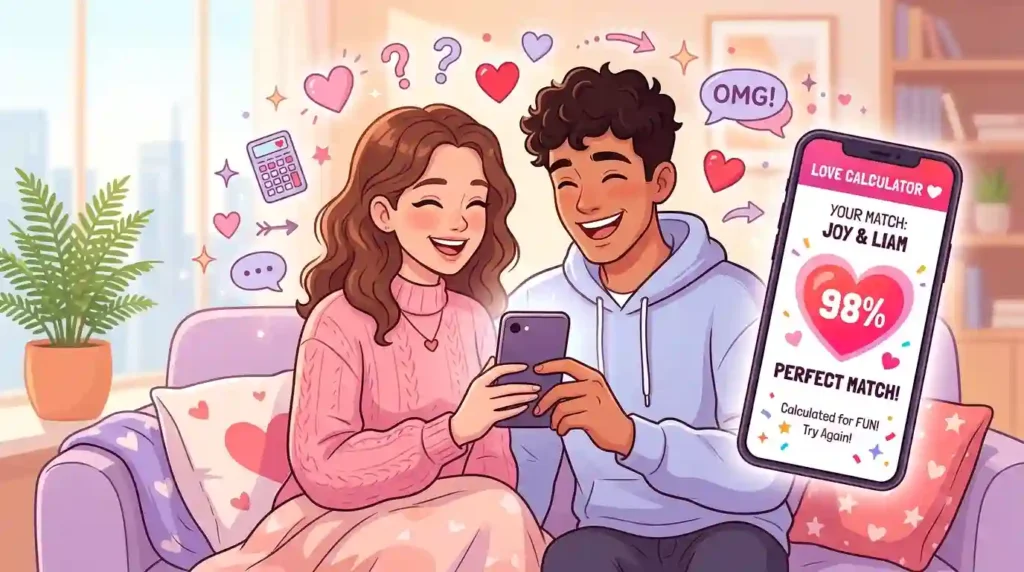
For example, someone may use a Love Calculator tool just for fun with a friend, partner, or crush. The process is quick, easy, and entertaining. It creates a moment of excitement, especially when the result feels accurate or funny.
The Role of Social Sharing
Love calculators also became popular because they are highly shareable. People often send screenshots of their love percentage to friends, post the result on social media, or use it as a conversation starter with someone they like. This makes the tool more than just a calculator—it becomes a social experience.
Nostalgia and Online Romance Games
Many people first discovered love calculators as teenagers or during early internet days. These tools were often used in school, friendship groups, online forums, and casual chatrooms. Even today, they carry a sense of nostalgia. They remind users of innocent crushes, secret admirers, and playful romantic curiosity.
How a Love Calculator Usually Works
Although different websites may use different systems, most love calculators work through simple algorithms. These algorithms usually do not analyze real emotional compatibility. Instead, they generate a score based on basic inputs.
Name-Based Love Calculation
The most common type of love calculator uses two names. It may compare letters, count vowels, calculate matching characters, or apply a random formula to produce a love percentage. This type of name compatibility calculator is fun, but names alone cannot reveal emotional chemistry or long-term relationship success.
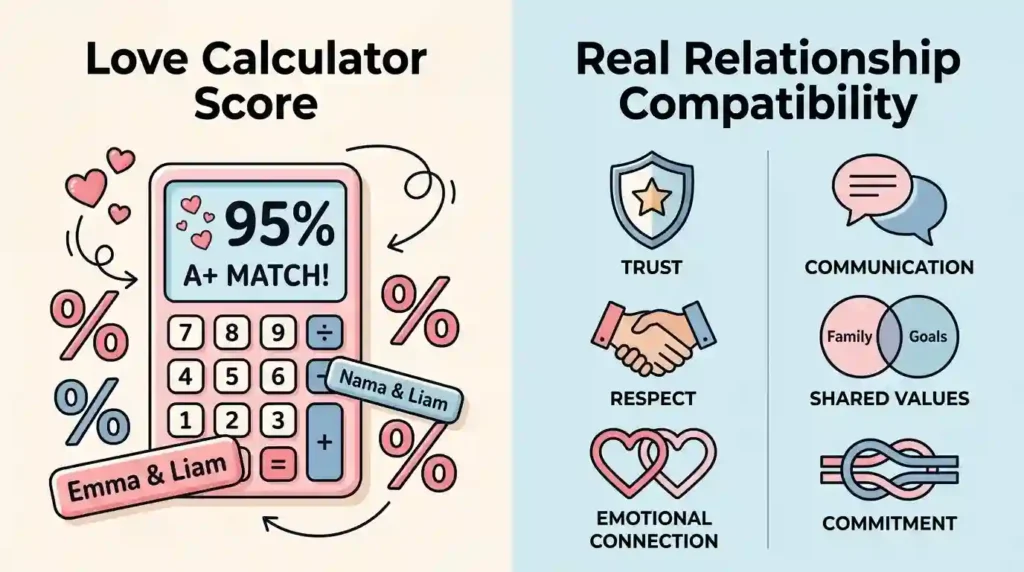
A person’s name does not show whether they are kind, loyal, emotionally available, respectful, honest, or compatible with your values. Two people may have names that produce a 95% match but still have completely different lifestyles, goals, and communication patterns.
Date of Birth and Numerology Style Calculators
Some love calculators use birth dates, life path numbers, numerology, or astrology-inspired logic. These tools may feel more personalized because they use personal information beyond names. However, they still cannot measure the deeper realities of romantic compatibility.
Birth dates may be fun to compare, but they do not explain how two people handle conflict, support each other, build trust, or make decisions as a couple.
Zodiac and Horoscope-Based Love Tests
Zodiac compatibility tools are also popular. They compare star signs and suggest whether two people are romantically aligned. While astrology can be entertaining and meaningful for many people as a belief system or self-reflection tool, it should not replace real communication and emotional understanding.
Randomized Entertainment Algorithms
Some love calculators use random or semi-random results. This means the percentage may be generated mainly for fun, not accuracy. The result might appear scientific because it includes numbers, percentages, and compatibility labels, but that does not make it a valid relationship assessment.
Why Love Calculator Is More Entertainment Than Science, Not a Real Compatibility Test
A scientific test requires evidence, repeatable methods, measurable variables, and validated results. A love calculator usually does not meet these standards. It may look like a compatibility test, but it does not study the actual emotional, psychological, and social factors that shape a relationship.
Real Love Cannot Be Reduced to a Percentage
Love is not a fixed number. A couple cannot be accurately described as “72% compatible” based only on names or birth dates. Real love changes over time. It grows through shared effort, emotional safety, respect, communication, forgiveness, and commitment.
A relationship that begins with uncertainty can become strong through patience and understanding. Likewise, a relationship that feels perfect at first can struggle if the partners lack trust, honesty, or emotional maturity.
Love Calculators Do Not Measure Communication
Communication is one of the strongest foundations of relationship compatibility. Couples need to express feelings, listen actively, discuss problems, set boundaries, and resolve disagreements. A love calculator cannot measure how two people communicate in real life.
It cannot know whether one partner avoids difficult conversations, whether both people feel heard, or whether conflict turns into understanding or resentment.
Love Calculators Do Not Measure Trust
Trust is essential in romantic relationships. It develops through consistency, honesty, reliability, and emotional safety. A calculator cannot evaluate whether someone keeps promises, respects boundaries, or makes their partner feel secure.
Without trust, even strong attraction can become unstable.
Love Calculators Do Not Measure Shared Values
Long-term compatibility often depends on shared values. These may include views on marriage, family, money, career, religion, lifestyle, parenting, personal growth, and emotional priorities. A love calculator cannot understand these deeper life choices.
For example, two people may have a high love calculator score but completely different expectations about marriage or commitment. For a deeper discussion on this topic, read Can Love Calculator Be Used for Marriage Compatibility.
The Psychology Behind Love Calculator Fun
Love calculators remain popular not because they are scientifically accurate, but because they satisfy emotional curiosity. They create suspense, surprise, and playful hope. This makes them enjoyable even when users know the results are not serious.
Curiosity About Romantic Possibility
Humans are naturally curious about love and attraction. When someone has a crush, they often look for signs, hints, and reassurance. A love calculator gives a quick answer to a question that may feel emotionally exciting: “Do we match?”
Even if the result is random, the emotional experience can feel real because the person already cares about the answer.
Confirmation Bias
Confirmation bias happens when people pay more attention to information that supports what they already want to believe. If someone likes a person and the calculator gives a high score, they may feel the result is “proof” of compatibility. If the score is low, they may dismiss it as inaccurate.
This does not mean users are foolish. It simply shows how emotions influence interpretation.
The Barnum Effect
The Barnum effect is when people believe general statements are personally accurate. Love calculators often display broad messages such as “You both have strong chemistry” or “This relationship may need patience.” These statements can feel personal, even though they could apply to many couples.
Playful Social Bonding
Using a love calculator with friends or a partner can be a bonding activity. It encourages laughter, teasing, conversation, and shared curiosity. In this way, the tool can create positive social interaction even if the score itself has no scientific meaning.
What Real Relationship Compatibility Actually Means
If love calculators are not scientific, what does real compatibility involve? Relationship compatibility is much more complex than matching names or numbers. It includes emotional, psychological, practical, and social factors.
Emotional Compatibility
Emotional compatibility means two people understand, respect, and respond to each other’s feelings. They may not feel the same way about everything, but they are willing to listen, comfort, and support each other.
Emotionally compatible partners often make each other feel safe, valued, and accepted.
Communication Compatibility
Communication compatibility means both partners can talk openly and respectfully. They do not have to agree on everything, but they should be able to discuss disagreements without cruelty, manipulation, or avoidance.
Strong communication includes listening, honesty, empathy, and patience.
Lifestyle Compatibility
Lifestyle compatibility includes daily habits, routines, social preferences, spending patterns, career goals, and future plans. One partner may prefer a quiet life while the other wants constant travel and social activity. These differences can be managed, but they require awareness and compromise.
Value Compatibility
Shared values help couples make important decisions. Values influence how people handle money, family responsibilities, loyalty, personal boundaries, spirituality, marriage, children, and long-term goals.
A love calculator cannot detect these values, but they often matter more than initial chemistry.
Physical and Romantic Attraction
Attraction is also part of compatibility. Romantic chemistry, affection, and physical attraction can help partners feel connected. However, attraction alone is not enough to sustain a healthy relationship. It needs to be supported by trust, respect, and commitment.
Conflict Resolution
Every couple faces conflict. The difference between healthy and unhealthy relationships often lies in how conflict is handled. Compatible partners may disagree, but they try to repair misunderstandings and solve problems together.
Can a Love Calculator Still Be Useful?
Yes, a love calculator can still be useful when used in the right way. The key is to treat it as entertainment, not as a final judgment about your love life.
It Can Be a Conversation Starter
A love calculator result can lead to fun conversations. Couples may laugh about the score, discuss what compatibility means, or talk about their relationship in a relaxed way. For people who feel shy, it can be an easy way to start a romantic conversation.
It Can Add Fun to Dating
Dating should not always feel serious. Fun tools like love meters, crush calculators, romantic quizzes, and compatibility games can make the dating experience more playful. They can add humor and excitement without creating pressure.
It Can Encourage Self-Reflection
Sometimes a love calculator result makes people think about their relationship. A low score might lead someone to ask, “What actually makes us compatible?” A high score might make someone reflect on why they feel hopeful. In this way, the tool can indirectly encourage deeper thinking.
It Can Be Used for Entertainment Content
Love calculators are also useful for blogs, social media posts, quizzes, Valentine’s Day content, dating websites, and relationship-themed platforms. They attract users because love and compatibility are evergreen topics.

Love Calculator vs Scientific Relationship Assessment
A love calculator and a scientific relationship assessment are very different. One is designed mainly for fun, while the other uses research-based methods to evaluate relationship patterns.
Love Calculator
A love calculator usually provides instant results based on limited information. It may use names, birth dates, zodiac signs, or random algorithms. The result is easy to understand and fun to share.
However, it does not collect enough meaningful data to evaluate a real relationship.
Scientific Relationship Assessment
A more serious relationship assessment may examine communication style, attachment patterns, emotional needs, conflict behavior, personality traits, expectations, and shared values. These assessments are often developed through psychological research and may be used by counselors or relationship experts.
Even then, no assessment can perfectly predict love. Human relationships are dynamic, and people grow, change, and respond differently over time.
Why Numbers Feel Scientific
Love calculators often use percentages, charts, and labels such as “perfect match” or “soulmate connection.” These features make the tool feel scientific. But numbers alone do not prove accuracy.
A random percentage can look official, but without validated research behind it, the number is simply part of the entertainment experience.
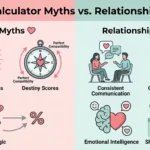
Common Myths About Love Calculators
Many people enjoy love calculators but misunderstand what they can do. Here are some common myths.
Myth 1: A High Score Means True Love
A high score does not guarantee true love. It may feel exciting, but true love depends on behavior, care, emotional support, and mutual effort. A score can make you smile, but it cannot replace real relationship experience.
Myth 2: A Low Score Means the Relationship Will Fail
A low score does not mean your relationship is doomed. Many successful couples may receive a low result from a random calculator. What matters more is how both people treat each other in real life.
Myth 3: Names Can Reveal Complete Compatibility
Names may be fun to compare, but they cannot reveal personality, loyalty, honesty, or emotional maturity. Name compatibility is entertaining, not predictive.
Myth 4: Love Calculators Are the Same as Dating Algorithms
Some people compare love calculators with dating apps, but they are not the same. Dating platforms may use profile data, preferences, interests, and behavior patterns. A simple love calculator usually uses far less information and is designed more for fun than matchmaking.
Myth 5: Love Can Be Fully Measured
Love can be studied, discussed, and understood from psychological, biological, and social perspectives, but it cannot be fully reduced to one number. Love is lived through actions, emotions, memories, and choices.
Safe Ways to Use a Love Calculator
A love calculator is harmless when used with the right mindset. Problems begin only when people take the result too seriously or use it to make major emotional decisions.
Use It for Fun Only
The best way to use a love calculator is as a lighthearted game. Enjoy the result, laugh about it, and move on. Do not let a percentage decide whether you should start, continue, or end a relationship.
Do Not Judge Your Partner by the Result
If the score is low, do not blame your partner or doubt the relationship immediately. A calculator does not know your emotional bond, private memories, or shared experiences.
Talk to Your Partner Instead
If you are unsure about your compatibility, have an honest conversation. Ask about values, expectations, goals, boundaries, and feelings. Real communication gives more insight than any online score.
Use It as a Playful Icebreaker
A love calculator can be a fun way to break the ice with someone you like. It can create laughter and curiosity, especially when used casually.
Avoid Overthinking the Score
Whether the score is high or low, remember that it is not a scientific diagnosis. Do not overanalyze it. The real signs of compatibility appear in everyday behavior.
Conclusion
Love calculators are popular because they are fun, simple, romantic, and instantly engaging. They give users a quick love percentage that can spark laughter, curiosity, and conversation. However, they should not be confused with scientific relationship analysis.
Real love is shaped by trust, communication, shared values, emotional intimacy, respect, attraction, and commitment. These qualities cannot be measured accurately through names, birth dates, zodiac signs, or random algorithms. A love calculator can entertain you, but it cannot truly define your relationship.
The healthiest way to use a love calculator is to enjoy it as a playful online tool. Use it to smile, start a conversation, or add fun to your romantic life—but let real actions, honest communication, and emotional connection guide your relationship decisions.
FAQs
1. Is a love calculator scientifically accurate?
No, a love calculator is not scientifically accurate. Most love calculators use simple algorithms, name matching, birth dates, zodiac signs, or random formulas. They are created mainly for entertainment and should not be used as serious relationship tests.
2. Why do people use love calculators?
People use love calculators because they are fun, quick, and exciting. They create curiosity about romantic compatibility and can be used with friends, crushes, or partners as a playful activity.
3. Can a love calculator predict true love?
No, a love calculator cannot predict true love. True love depends on emotional connection, trust, respect, communication, shared values, and commitment. These factors cannot be measured by a simple online percentage.
4. Is name compatibility real?
Name compatibility can be entertaining, but it is not a reliable way to measure romantic compatibility. A person’s name does not reveal their personality, values, emotional maturity, or relationship behavior.
5. Can I use a love calculator for marriage decisions?
A love calculator should not be used for serious marriage decisions. Marriage compatibility involves family values, finances, lifestyle, communication, emotional support, long-term goals, and commitment. A calculator can be fun, but it should not replace real conversations or professional guidance.
6. What should I focus on instead of a love calculator score?
Instead of focusing on a love calculator score, pay attention to how you and your partner communicate, solve problems, respect boundaries, support each other, and plan for the future. These are stronger signs of real compatibility.
7. Can a low love calculator score affect my relationship?
It should not affect your relationship if you understand that the score is only for fun. A low score does not mean your relationship will fail. Real compatibility depends on your actions and emotional bond, not an online result.
8. Are zodiac love calculators better than name love calculators?
Zodiac love calculators may feel more personal, but they are still mainly entertainment tools. They can be fun for self-reflection or conversation, but they should not be treated as scientific relationship predictions.
9. Can love calculators be used by couples?
Yes, couples can use love calculators for fun. They can be a playful way to laugh together, start a conversation, or enjoy a romantic moment. The key is not to take the result too seriously.
10. What is the best way to use a love calculator?
The best way to use a love calculator is as a lighthearted entertainment tool. Enjoy the result, share it for fun, and remember that real love is built through trust, respect, communication, and consistent effort.