

Summary
Many people know that online love tools are created for fun, yet they still feel surprisingly meaningful. This is why Love Calculator Results Feel Emotionally Accurate to so many users: they combine curiosity, hope, personalization, emotional timing, and familiar relationship patterns into a short result that feels personally relevant. Whether someone is checking a crush’s name, testing a partner’s compatibility, or simply enjoying a romantic quiz, the result often reflects feelings they already carry inside. This article explores the psychology behind love calculator results, why they feel accurate, and how users can enjoy them in a healthy, entertaining way.
Table of Content
- Why Love Calculator Results Feel Emotionally Accurate in Modern Dating
- The Psychology Behind Love Compatibility Scores
- Why Love Calculator Results Feel Emotionally Accurate Even When They Are for Fun
- Emotional Validation and Romantic Curiosity
- How Personalization Makes Love Results Feel Real
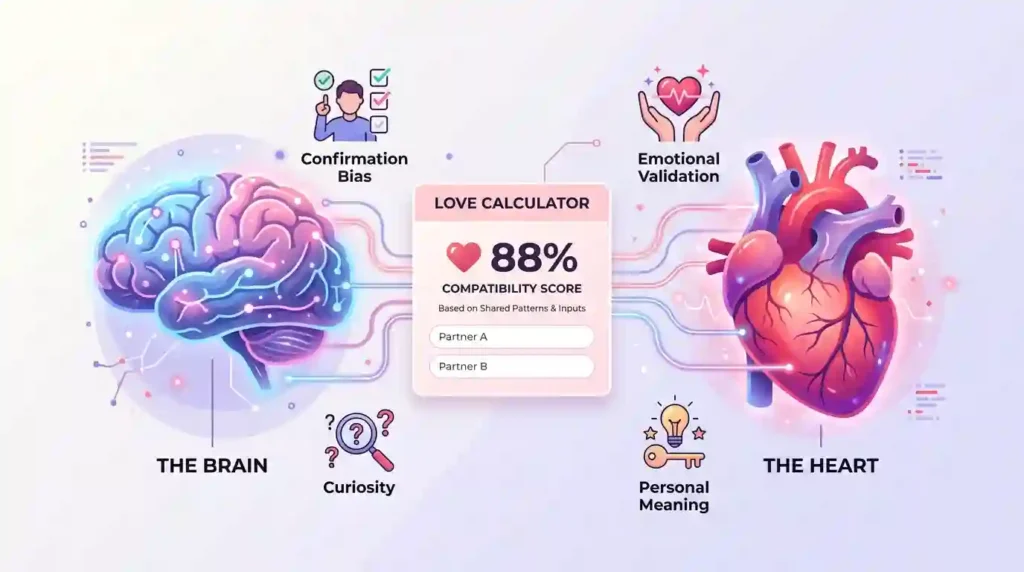
- The Role of Confirmation Bias in Relationship Scores
- Love Calculator Results, Hope, and Imagination
- When Love Calculators Become a Conversation Starter
- How to Interpret Love Calculator Results Wisely
- Image Prompts for Blog Visuals
- Conclusion
- FAQs
Why Love Calculator Results Feel Emotionally Accurate in Modern Dating
Love has always made people search for signs. Before online tools, people looked at handwritten notes, star signs, dreams, initials carved into notebooks, friendship bracelets, and even random coincidences. Today, digital romance has added a new layer to this behavior. A simple online love compatibility test can feel like a small emotional mirror.
A love calculator usually asks for names, dates of birth, or basic details and then gives a percentage-based relationship score. Technically, most of these tools are created for entertainment. Still, users often react emotionally because the topic itself is emotional. When a tool talks about attraction, chemistry, trust, passion, or long-term compatibility, it touches feelings that are already meaningful to the person reading it.
This is one reason people enjoy using a Love Calculator. It is not only about the number. It is about the moment of waiting, the excitement of entering two names, and the curiosity of seeing whether the result matches what the heart secretly hopes.
Online love quizzes, romantic compatibility tools, couple calculators, crush tests, and relationship score generators work because they turn invisible feelings into visible results. Even when the percentage is playful, the experience feels personal.
The Psychology Behind Love Compatibility Scores
Humans Naturally Search for Meaning in Love
Romantic emotions can be confusing. A person may wonder, “Do they like me back?” “Are we compatible?” “Is this relationship going somewhere?” “Why do I feel such a strong connection?” In such moments, people look for patterns and signs that help them make sense of uncertainty.
A love calculator gives structure to that uncertainty. Instead of vague emotions, it provides a score, a label, or a short explanation. This can feel comforting because the mind likes clarity. Even a playful compatibility percentage can feel emotionally satisfying when someone is already thinking deeply about a relationship.
The Barnum Effect Makes General Results Feel Personal
One major psychological reason love calculator results feel accurate is the Barnum effect, also known as the Forer effect. The American Psychological Association describes the Barnum effect as the tendency to believe that general or vague personality descriptions apply specifically to oneself. APA Dictionary of Psychology: Barnum effect
For example, a love result might say, “You both have strong emotional energy, but communication will be important.” This statement can apply to many couples, but it feels personal because almost every relationship involves emotional energy and communication. The reader connects the statement to their own experience and thinks, “That sounds exactly like us.”
Love calculators often use soft, relatable relationship language. Words like trust, attraction, emotional bond, shared understanding, patience, passion, and commitment feel intimate. Because these words describe common romantic experiences, users naturally connect them to their own love story.
Relationship Language Feels Deeply Personal
A result about career or general personality may be interesting, but a result about love feels more intimate. Romance involves vulnerability, hope, fear, excitement, insecurity, and emotional attachment. When a tool comments on a relationship, even lightly, the reader may interpret it through a very personal lens.
This is why phrases like “strong chemistry,” “hidden attraction,” “emotional connection,” “possible future,” or “deep compatibility” can feel powerful. They speak to desires people may not openly express.
Why Love Calculator Results Feel Emotionally Accurate Even When They Are for Fun
The User Already Has Feelings Before Seeing the Result
A love calculator does not create emotions from nothing. Most users already have a person in mind. They may be thinking about a crush, a partner, an ex, a best friend, or someone they secretly admire. By the time they enter the names, emotional energy is already present.
This means the result is not read neutrally. It is read through hope, memory, attraction, and curiosity. If the score is high, the user may feel excited because it confirms what they wanted to believe. If the score is low, they may laugh, reject it, or try again with a nickname. Either way, the result creates an emotional response.
The Score Feels Like Proof
Numbers feel objective. A result like “87% compatible” looks more concrete than a simple sentence saying “You may be a good match.” The percentage gives the feeling of measurement, even when the tool is designed for entertainment.
This is common in many online quizzes and personality tests. A number, badge, category, or rating makes the experience feel more official. In love calculators, a percentage score can make romantic feelings appear measurable.
A relationship score may not truly define love, but it can make emotions feel easier to understand. That is why users may remember the percentage, share it with friends, or compare multiple names for fun.
Romantic Uncertainty Increases Emotional Impact
Love is rarely fully certain. Even in strong relationships, people may wonder about long-term compatibility, emotional balance, loyalty, or future potential. For people with a crush, uncertainty is even stronger.
A love calculator result gives a quick answer to an emotionally loaded question. That answer may be playful, but because the question matters, the result feels important.
Emotional Validation and Romantic Curiosity
People Want Their Feelings to Be Seen
One reason love calculator results feel emotionally accurate is emotional validation. When someone likes another person, they often want reassurance that the feeling means something. A positive love result can feel like a small confirmation: “Maybe this connection is real.”
Even if the user knows the result is not scientific, it may still feel good. Emotional validation does not always require perfect logic. Sometimes people simply enjoy seeing their hopes reflected back in a fun and harmless way.
Curiosity Makes the Experience Addictive
Love calculators are simple, fast, and emotionally interesting. Users can test different name combinations, compare results, and imagine different romantic possibilities. This makes the experience engaging.
Someone might check their current partner, then an old crush, then a celebrity crush, then a friend’s relationship. The tool becomes less about prediction and more about playful exploration.
This curiosity is part of why online love tests remain popular. They offer instant entertainment while touching one of the most universal human interests: romantic connection.
How Personalization Makes Love Results Feel Real
Names Make the Result Feel Unique
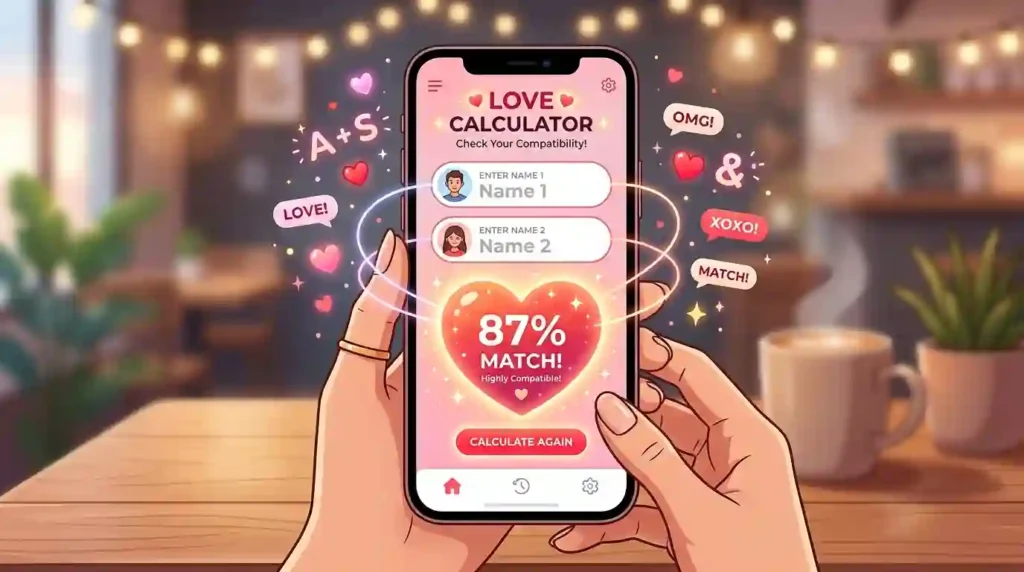
When a tool uses your name and another person’s name, the experience instantly feels more personal. Seeing two names together creates a sense of emotional focus. Even if the formula is simple, the presentation feels customized.
This matters because personalization increases attention. A generic statement about love may be ignored, but a result that includes your name and your partner’s name feels directed at you.
For example, “Ali and Sara share a warm emotional bond” feels more personal than “This couple may have a warm emotional bond.” The names make the result feel like it belongs to a specific love story.
Users Fill in the Gaps
Love calculator descriptions are often brief. Because they do not explain every detail, users mentally fill in the missing parts. This makes the result feel even more accurate.
If the result says, “You both may face communication challenges,” the reader may remember a recent argument, a delayed reply, or a moment of misunderstanding. The result becomes connected to real memories.
This is called subjective interpretation. The user gives meaning to the result based on personal experience. The more emotionally invested someone is, the easier it becomes to connect the result to real life.
The Role of Confirmation Bias in Relationship Scores
People Notice What Matches Their Feelings
Confirmation bias is the tendency to notice information that supports what we already believe or hope. In the context of love calculators, this means users may focus on the parts of a result that match their emotional expectations.
If someone believes they have strong chemistry with a crush, they will pay more attention to a line about attraction. If someone worries about communication, they will notice a warning about misunderstandings. The result feels accurate because the mind selects the parts that fit.
High Scores Feel Exciting
A high love compatibility score can feel thrilling. It may make someone smile, screenshot the result, send it to a partner, or use it as a playful sign. The higher the score, the more it may feel like romantic approval.
This is especially true when someone already wants the relationship to work. A high score becomes a fun emotional reward.
For a deeper understanding of romantic scoring language, users may also enjoy reading What Does “Perfect Match” Mean in Love Calculator Terms.
Low Scores Can Still Feel Meaningful
Interestingly, low scores can also feel accurate. If someone has doubts about a relationship, a lower result may seem to confirm their concerns. If the relationship feels complicated, the score may become a symbol of that emotional difficulty.
However, users should remember that a love calculator is not a final judgment. It should not replace communication, trust, emotional maturity, or real relationship experience.
Love Calculator Results, Hope, and Imagination
Love Tools Create a Story
People do not only read love calculator results. They imagine around them. A result can become the beginning of a romantic story in the mind.
A score of 92% may make someone imagine a future together. A result saying “strong attraction but needs patience” may make someone think about how the relationship could grow. This storytelling effect makes the result emotionally rich.
Love is naturally connected to imagination. People imagine first dates, future conversations, marriage, messages, apologies, reunions, and possibilities. A love calculator result gives that imagination a small push.
The Result Feels Like a Sign
Many people enjoy romantic signs. A favorite song playing at the right moment, repeated numbers, matching initials, zodiac compatibility, or a surprising love calculator score can all feel meaningful.
This does not mean the tool truly predicts destiny. It means people often use signs to explore emotions. A love result can feel like a sign because it appears at a moment when the user is already emotionally open.
Entertainment Can Still Feel Emotionally True
Something does not have to be scientifically exact to feel emotionally true. A poem, song lyric, movie scene, or horoscope can feel accurate because it expresses something the person already feels.
Love calculator results work similarly. They may not measure real compatibility in a clinical way, but they can describe common relationship emotions in a way that feels relatable.
When Love Calculators Become a Conversation Starter

Couples Use Results for Fun
Many couples use love calculators as a lighthearted activity. They enter their names, laugh at the score, compare results, and talk about whether the description fits them. This can be a fun bonding moment.
A couple may use the result to start conversations like:
“Do you think we communicate well?”
“Are we really that compatible?”
“What part of this sounds like us?”
“Would you rate our chemistry higher or lower?”
In this way, the love calculator becomes more than a result. It becomes a playful relationship discussion.
Friends Share Results Socially
Love calculator results are also popular among friends. People share screenshots in group chats, test celebrity couples, compare crushes, or joke about unexpected matches. This social sharing makes the result feel more engaging.
The emotional accuracy may come not only from the result itself, but from the reactions around it. If friends agree that a result sounds true, it can feel even more convincing.
It Helps People Express Feelings Indirectly
Sometimes people use love calculators to say something they are too shy to say directly. Sending a high compatibility score to a crush can be a playful way to hint at interest. Sharing a result with a partner can be a cute way to show affection.
Because the tool feels casual, it reduces emotional pressure. A person can say, “Look, the calculator says we are a great match,” without making a serious confession.
How to Interpret Love Calculator Results Wisely
Enjoy the Result, But Do Not Depend on It
A love calculator is best used as entertainment, not as a serious relationship decision-maker. It can be fun, sweet, and emotionally interesting, but it should not decide whether someone stays, leaves, confesses, or commits.
Real compatibility depends on communication, respect, values, emotional safety, honesty, shared goals, trust, and effort. These cannot be fully measured by a simple online score.
Use It as a Reflection Tool
Instead of asking, “Is this result true?” users can ask, “Why does this result feel true to me?” That question is more useful.
If a result about communication feels accurate, maybe communication is something worth discussing. If a result about emotional chemistry feels right, maybe the relationship does have strong attraction. If a result about patience stands out, maybe the relationship needs more understanding.
In this way, a love calculator can become a playful reflection tool.
Do Not Let a Low Score Hurt Your Confidence
A low result should not make someone feel rejected, hopeless, or insecure. Online love scores are not emotional facts. They are generated for fun and engagement.
A strong relationship can have a low calculator score, and a weak relationship can have a high one. The true quality of a relationship is shown through behavior, care, consistency, and emotional respect.
Real Love Is Built, Not Calculated
Compatibility matters, but love is not only about matching perfectly. Healthy relationships are built through patience, listening, forgiveness, shared effort, and emotional growth.
A love calculator can make romance more fun, but real love grows through real actions.
Conclusion
Love calculator results feel emotionally accurate because they connect with feelings people already have. They use romantic language, personalization, compatibility scores, and emotionally familiar themes that make users feel seen. Psychological patterns like the Barnum effect, confirmation bias, emotional validation, and romantic imagination all play a role in making a simple online result feel meaningful.
A love calculator should be enjoyed as a fun and playful tool. It can start conversations, inspire curiosity, and add excitement to romantic moments. However, it should not replace real communication, trust, respect, and emotional understanding.
The best way to use a love calculator is to enjoy the experience, smile at the result, and reflect on why it feels meaningful. Real love is not proven by a percentage. It is built through care, honesty, patience, and consistent effort.
FAQs
1. Why do love calculator results feel so accurate?
Love calculator results feel accurate because they often use broad romantic statements that people can easily connect to their own experiences. Personal emotions, hope, curiosity, and confirmation bias also make the results feel more meaningful.
2. Are love calculator results scientifically correct?
Most love calculators are designed for entertainment, not scientific relationship analysis. They can be fun to use, but they should not be treated as a serious measurement of real compatibility.
3. Why do people believe high love compatibility scores?
High scores feel exciting because they confirm what users may already hope or believe. A high percentage can feel like emotional validation, especially when someone already feels attracted to the other person.
4. Can a love calculator predict a successful relationship?
No online love calculator can truly predict the future of a relationship. Successful relationships depend on communication, trust, respect, emotional maturity, shared values, and consistent effort.
5. What does a low love calculator score mean?
A low score does not mean a relationship will fail. It is usually just part of the tool’s entertainment system. Users should not make serious emotional decisions based only on a calculator result.
6. Why do names make love calculator results feel personal?
Names create a sense of personalization. When users see their name and another person’s name together, the result feels unique, even if the message is general.
7. Is it okay to use a love calculator with my partner?
Yes, using a love calculator with a partner can be fun and playful. It can even become a light conversation starter about chemistry, communication, and compatibility.
8. How should I use love calculator results wisely?
Use them for entertainment and reflection. Enjoy the result, but remember that real love is shown through actions, honesty, trust, and emotional care.